
Leak Detection and Slab Leaks
The water bill is often the first one to notice. It creeps up for a couple of months, nobody in the house has changed their habits, and there is no puddle anywhere. That is the frustrating thing about hidden leaks: the water is going somewhere, and it may be under a slab, inside a wall or in the yard between the meter and the house.
Montgomery Plumbing Pros connects homeowners with independent local plumbers who do leak detection. We do not bring the equipment ourselves. What follows is what you can check on your own first, and what a good plumber does to find a leak without tearing up more than necessary.
Clues you can check yourself
Start with the meter. The EPA's WaterSense program suggests a simple test: read the meter, use no water for two hours, and read it again. If it moved at all, you probably have a leak. Many meters also have a small triangle or dial that spins with even a slight flow. Do the test with every faucet, appliance and irrigation zone off.
Then narrow it down. Turn off the valve where the line enters the house; if the meter still moves, the leak is likely in the yard line. If it stops, the leak is inside. Inside, look for a warm spot on a tile or concrete floor, which can mean a hot water line leaking under the slab, the sound of running water when everything is off, damp or stained drywall low on a wall, a musty smell in one room, or cracks in floor tile that were not there before. A running toilet can also look like a hidden leak on the bill, so try a few drops of food coloring in the tank and see whether it shows up in the bowl. WaterSense has the full set of leak checks and figures on how much water a small leak wastes over a year.
Why clay soil stresses pipes here
Montgomery sits in Alabama's traditional Black Belt, and the clayey soils of that region swell when they get wet and shrink when they dry out, opening cracks in dry spells. That movement puts stress on foundations, and a slab that shifts carries the pipes inside and under it along. The city averages a little over 51 inches of rain a year, with dry stretches in between, so the ground goes through that cycle again and again.
Pipe under a slab can also wear where it rubs against concrete or gravel as the house moves and the line expands and contracts with hot water. Slab leaks are not only an old-house problem; they turn up in newer slab homes too, including the slab homes around Pike Road.
How leaks are located
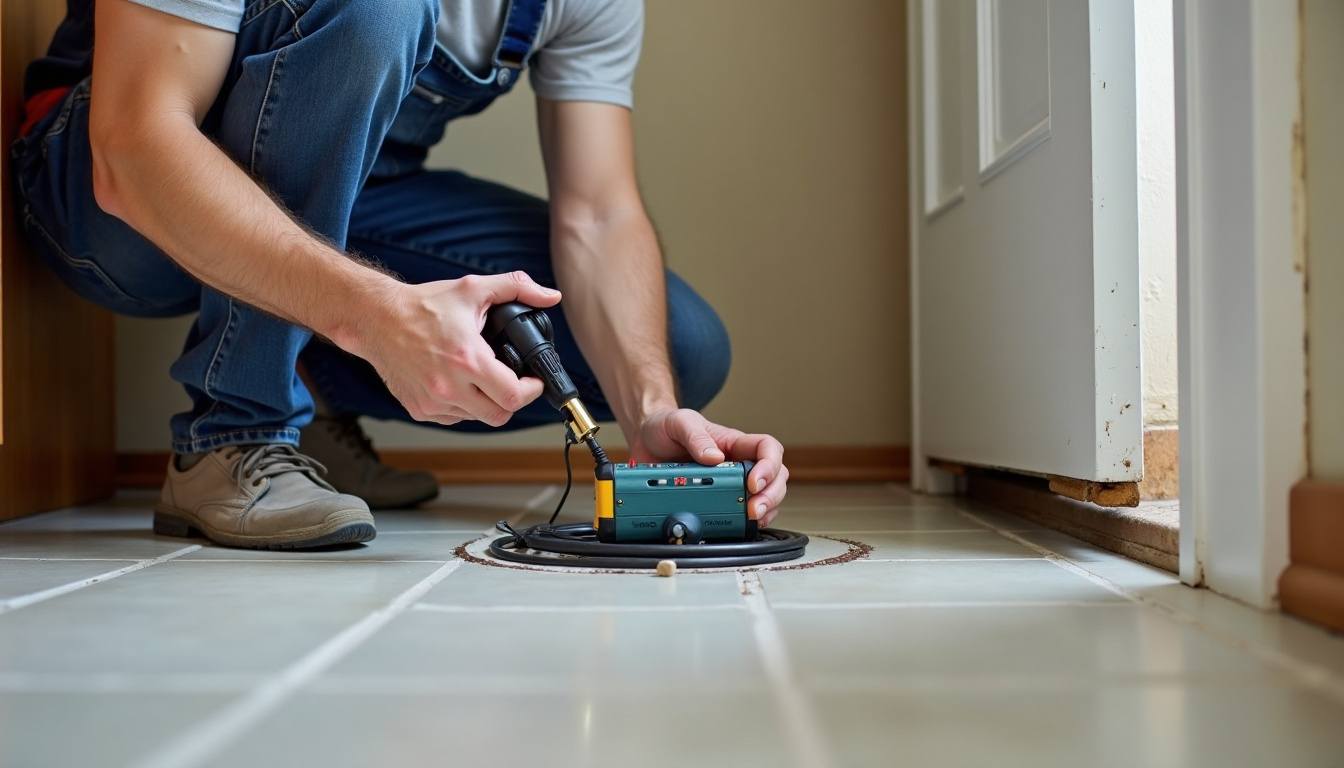
A plumber who does leak detection works from the outside in. A pressure test isolates the hot and cold sides, and sometimes individual lines, to find out which one is losing pressure. An acoustic listening device picks up the hiss of water escaping under pressure through concrete or flooring, and the plumber walks the line listening for the loudest point. A thermal camera can show the warm trail of a hot water leak across a slab floor. Some plumbers use a tracer gas pushed through an empty line and detected where it escapes.
The goal is to mark one spot, so that if the floor has to be opened, it is a small square instead of a trench across the kitchen. Ask what methods the plumber plans to use, and whether the leak detection is priced separately from the repair.
Spot repair or reroute
Once the leak is found, there are usually two choices. A spot repair means opening the floor at the leak, fixing that section, and patching the concrete and flooring. It makes sense for a single leak on otherwise sound pipe. A reroute abandons the leaking line under the slab and runs a new one through the attic or walls, which avoids breaking concrete and gets the line out from under a slab that may keep moving.
If the house has had more than one slab leak, or the pipe is old enough that more are likely, the plumber may suggest replacing the supply lines entirely instead. A leak at the water heater connections, or one weeping from the tank itself, is another story; that comes down to a heater that is weeping at the base rather than a slab problem.
Insurance and the water bill
Homeowner's policies vary on slab leaks. Many cover water damage from a sudden leak and sometimes the cost of getting to the pipe, but not always the pipe itself, and a slow leak over months can be treated differently. Take photos, keep the leak detection report, and call your insurer before major work if you can.
Some water utilities will consider a bill adjustment after a leak is repaired, usually with proof of the repair. Ask your water provider what they need. Ask for written prices before anything is opened up. That includes the detection visit, the repair, and any patching of floors or walls, quoted as separate lines so you can compare.
Start with a request
Tell us what you are seeing: the bill, the meter test result, warm spots, sounds, and whether the house is on a slab. Then send the form. If the meter keeps spinning with every tap off, close the main shutoff until a plumber can look. We connect you with an independent local plumber who handles leak detection, and you can check their license and insurance first.